GEO Tools Pricing 2026: What AI Visibility Tracking Actually Costs

On this page8 sections
- See Your Real GEO Tool Cost
- What the Sticker Price Doesn't Tell You
- Quick Comparison: GEO Tools Pricing 2026 at a Glance
- Tool-by-Tool: What Actually Drives GEO Tools Pricing 2026
- Rankscale — Lowest Entry Price, But Read the Prompt Cap
- Otterly.ai — Unlimited Seats Changes the Math for Teams
- HubSpot AEO — The Only Genuinely Free Way to Test the Waters
- Peec AI — Best Per-Prompt Value, With a Three-Engine Ceiling
- Semrush AI Visibility — The Per-Domain and Required-Suite Trap
- Where the Rest of the Field Lands
- Profound and Ahrefs Brand Radar — Where Enterprise Pricing Actually Starts
- Common Mistakes That Inflate Your GEO Tool Bill
- Frequently Asked Questions
- Final Verdict
- The sticker price on a GEO tool's pricing page isn't what you'll actually pay — per-domain billing, required base subscriptions, and prompt top-ups routinely push the real number 2-3x higher.
- Use the calculator below: answer a few questions about what you're tracking and get your real cost per tracked prompt, for every major GEO tool, with anything that can't cover your required AI engines automatically ruled out.
- It also flags which engines each tool simply can't track at any price — Claude is the most common blind spot.
- Advertised monthly prices assume your usage fits neatly inside one tier — most teams don't, and that gap is where the real cost lives.
- Some tools bill per domain or require a paid SEO suite underneath the sticker price, and no plain comparison table surfaces that on its own.
- Engine coverage is a hard ceiling, not a feature toggle — several tools can't track Claude at any price, on any plan.
- Cost per tracked prompt, not monthly sticker price, is the only honest way to compare two plans with different prompt allowances.
- The interactive calculator below turns all of this into one real number for your specific situation.
GEO Tools Pricing 2026: What AI Visibility Tracking Actually Costs
GEO tools pricing 2026 is a mess of asterisks. Every pricing page quotes a monthly fee like it's a fixed answer, but that number assumes your prompt count fits the tier exactly, that you only need the engines included at that price, and that nobody on your team needs a login beyond what's bundled in.
Add up per-domain billing, prompt top-up fees, and a base subscription some tools quietly require underneath the sticker price, and the number on the page stops meaning much.
This calculator does the actual math. Tell it how many prompts you're tracking, which AI engines matter to you, how many seats you need, and whether daily refreshes matter, and it converts sticker price into a real monthly total and cost per tracked prompt — ranked, with anything that can't cover your engines ruled out automatically. After that, we'll walk through what the calculator is adjusting for and give you honest, tool-by-tool notes on what actually drives the real cost.
If you're still working on getting your blog cited in ChatGPT and Perplexity in the first place, this is the natural next step once that's working — knowing what it costs to actually track whether it's paying off.
See Your Real GEO Tool Cost
Answer a few quick questions below and get your real cost per tracked prompt across every major AI visibility tracking tool, ranked by what you'd actually pay — not the sticker price.
That's your real number. If you want to understand exactly what's driving it, here's what the calculator just adjusted for on your behalf.
What the Sticker Price Doesn't Tell You
These are the exact things the calculator above weighs, and why the advertised monthly fee alone hides all of them:
- Per-domain billing — some tools charge per domain, so a five-brand agency multiplies the whole plan instead of sharing one subscription across brands.
- Required base subscriptions — a couple of AI-visibility modules only work bolted onto an existing paid SEO suite, which the sticker price never mentions.
- Prompt top-up fees — once you exceed a plan's prompt allowance, add-ons are usually priced worse than the plan itself.
- Engine-count tier gating — several tools cap how many AI engines you can track per tier, so wanting broader coverage pushes you to a higher plan even if your prompt volume would otherwise fit the entry tier.
- Refresh cadence — a cheap per-prompt rate buys you fewer actual looks at the data if the tool only refreshes weekly instead of daily.
Quick Comparison: GEO Tools Pricing 2026 at a Glance
| Tool | Best For | Free Plan | Starting Price (USD/mo) | Max Engines at Entry Tier |
|---|---|---|---|---|
| Rankscale | Budget-conscious solo trackers | No | $20 | 4 |
| Otterly.ai | Teams that need unlimited seats | No | $29 | 4 |
| HubSpot AEO | Testing before you commit | Yes | $0 | 2 |
| Peec AI | Best per-prompt value | No | $95 | 3 |
| Semrush AI Visibility | Teams already inside Semrush | No | $99 + base plan | 4 |
| SE Visible | Sentiment and competitor reporting | No | $189 | 5 |
| Scrunch AI | Widest self-serve engine coverage | No | $250 | 4 (6 on Growth) |
| AthenaHQ | Free pilot plus action recommendations | Yes | $0 | 3 |
| Profound | Enterprise action layer | No | $399 | 6 |
| Ahrefs Brand Radar | Ahrefs-native teams | No | $199 + base plan | 1 (6 on all-platforms) |
Every number here is a starting point, not what you'd actually pay — the calculator above ranks these by real cost per tracked prompt, scaled to your own engine mix, prompt volume, and seat count, not this sticker price. Here's what actually drives the real number for each one.
Tool-by-Tool: What Actually Drives GEO Tools Pricing 2026
Rankscale — Lowest Entry Price, But Read the Prompt Cap
Rankscale publishes the lowest entry price in the category at $20/month for its Entry tier, covering 25 prompts across four engines (ChatGPT, AI Overviews, Perplexity, Gemini). The Growth tier jumps to $79/month for 100 prompts and adds a fifth engine.
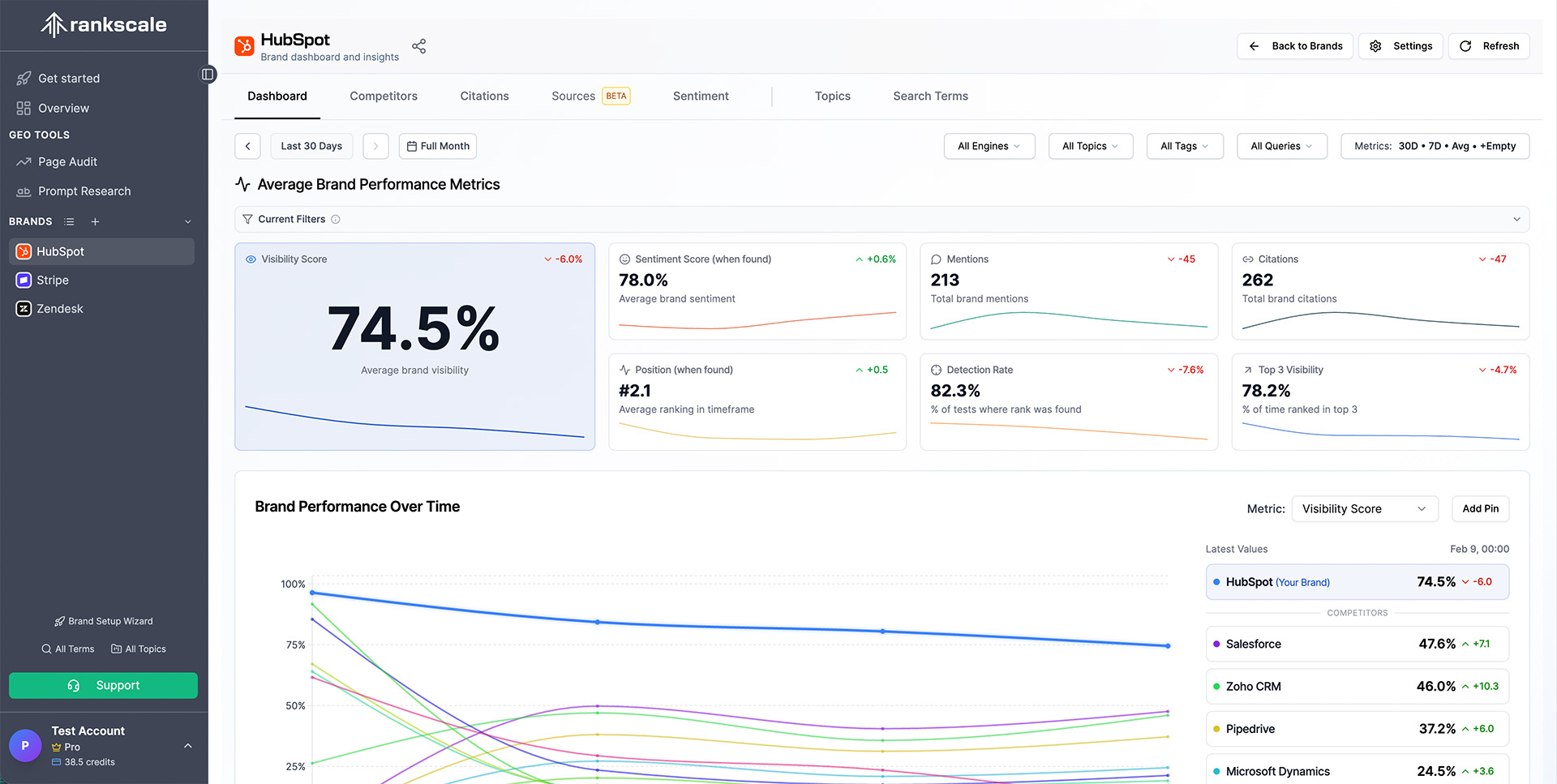
The catch: it's a newer platform, and its historical trend data is thinner than the established players — useful if you mainly care about a current snapshot, less so if you need a year of trend history to show a client. Best for solo consultants or small teams testing whether GEO tracking is worth budgeting for at all. Not ideal if you need Claude coverage or deep historical benchmarking.
Otterly.ai — Unlimited Seats Changes the Math for Teams
Otterly.ai's Lite tier starts at $29/month, but it's the only budget-tier tool here with unlimited seats included at every plan level, plus a GEO audit that returns specific on-page fixes rather than just a visibility score. Standard runs $99/month for 60 prompts, and Pro goes to $249/month for 200.

The catch: the $29 entry tier only tracks 15 prompts, which is a pilot, not a scale plan — you'll likely need Standard or Pro once you're tracking real coverage. Best for teams of any size that want everyone to have a login without paying per seat. Not ideal if you need more than 15 prompts and want to stay under $30/month.
HubSpot AEO — The Only Genuinely Free Way to Test the Waters
HubSpot's AEO Grader is a genuinely free tier — 10 prompts across ChatGPT and AI Overviews, no credit card, no trial expiration built into the pricing model. The paid Tracker tier is $50/month for 40 prompts, still on the same two engines.

The catch: engine coverage is shallow — it can't see Perplexity, Gemini, or Claude at any price, so it works as a first look, not a full monitoring setup. Best for a zero-risk gut check on whether your brand shows up in AI answers at all before you commit budget elsewhere. Not ideal once you need to track more than ChatGPT and AI Overviews.
Peec AI — Best Per-Prompt Value, With a Three-Engine Ceiling
Peec AI starts at $95/month for 50 prompts, scaling to $245/month for 150 and $495/month for 350 — with unlimited seats and real competitive benchmarking built in at every tier, which is where a lot of its per-prompt value comes from.
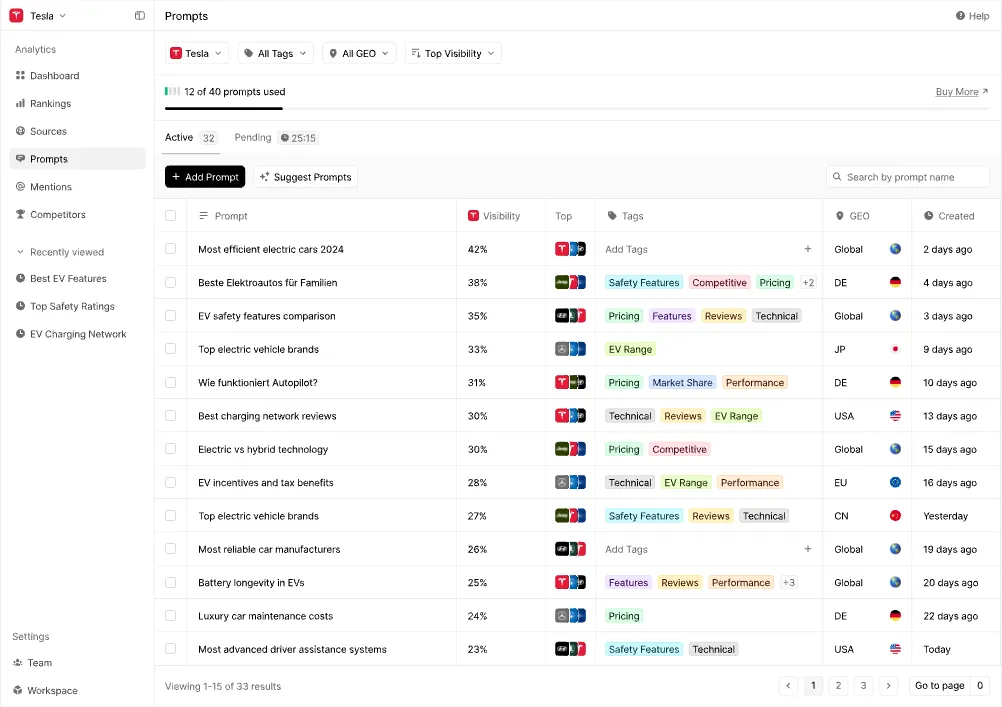
The catch: every self-serve tier caps you at three AI engines. If you need broader coverage than ChatGPT, AI Overviews, and one more, you're looking at an Enterprise quote rather than a higher self-serve plan.
Best for teams that have already picked their three priority engines and want strong benchmarking at a reasonable per-prompt rate. Not ideal if Claude and Gemini both matter to you alongside ChatGPT.
Semrush AI Visibility — The Per-Domain and Required-Suite Trap
Semrush's AI Visibility module is priced at $99/month for 50 prompts across four engines, plus $60 for every additional 50 prompts once you exceed that. It's the lowest-friction option if your team already lives inside Semrush day to day.

The catch is the one this whole article exists to flag: according to Semrush's own AI Visibility Toolkit pricing page [OPEN IN NEW TAB], the base plan is billed per domain, so a five-brand agency pays five times the sticker price. Best for single-brand teams already paying for Semrush. Not ideal for multi-brand agencies, where per-domain billing multiplies the bill fastest of any tool in this comparison.
Where the Rest of the Field Lands
SE Visible ($189-$519/month) covers five engines including Claude with clean sentiment and competitor reporting, though it's one of the newest entrants and its refresh cadence still trails the established platforms. Scrunch AI ($250-$579/month) has the widest self-serve engine coverage available anywhere in this comparison — Claude and Copilot/Grok included — but its entry Core tier caps you at four engines, so full coverage means the Growth plan. AthenaHQ pairs a genuinely free Essential tier (10 prompts, three engines) with a $295/month self-serve jump that adds a recommendation engine rather than just reporting — there's a big gap between the two with nothing in between.
If you already pay for a full SEO suite, our SE Ranking AI Overviews Tracker review is worth checking too — it bundles a lighter version of AI-visibility tracking into a platform you may already own. Run your own numbers through the calculator above for the exact cost each of these works out to at your volume.
Profound and Ahrefs Brand Radar — Where Enterprise Pricing Actually Starts
Profound is the enterprise standard: $399/month for its Growth tier covers 250 prompts across six engines with an action layer, SOC 2, and SSO — its Scale tier runs $1,200/month for 1,000 prompts and full ten-engine coverage. Ahrefs Brand Radar starts at $199/month per single AI platform, or $699/month for all platforms bundled, and needs a paid Ahrefs plan (from $129/month) sitting underneath it.
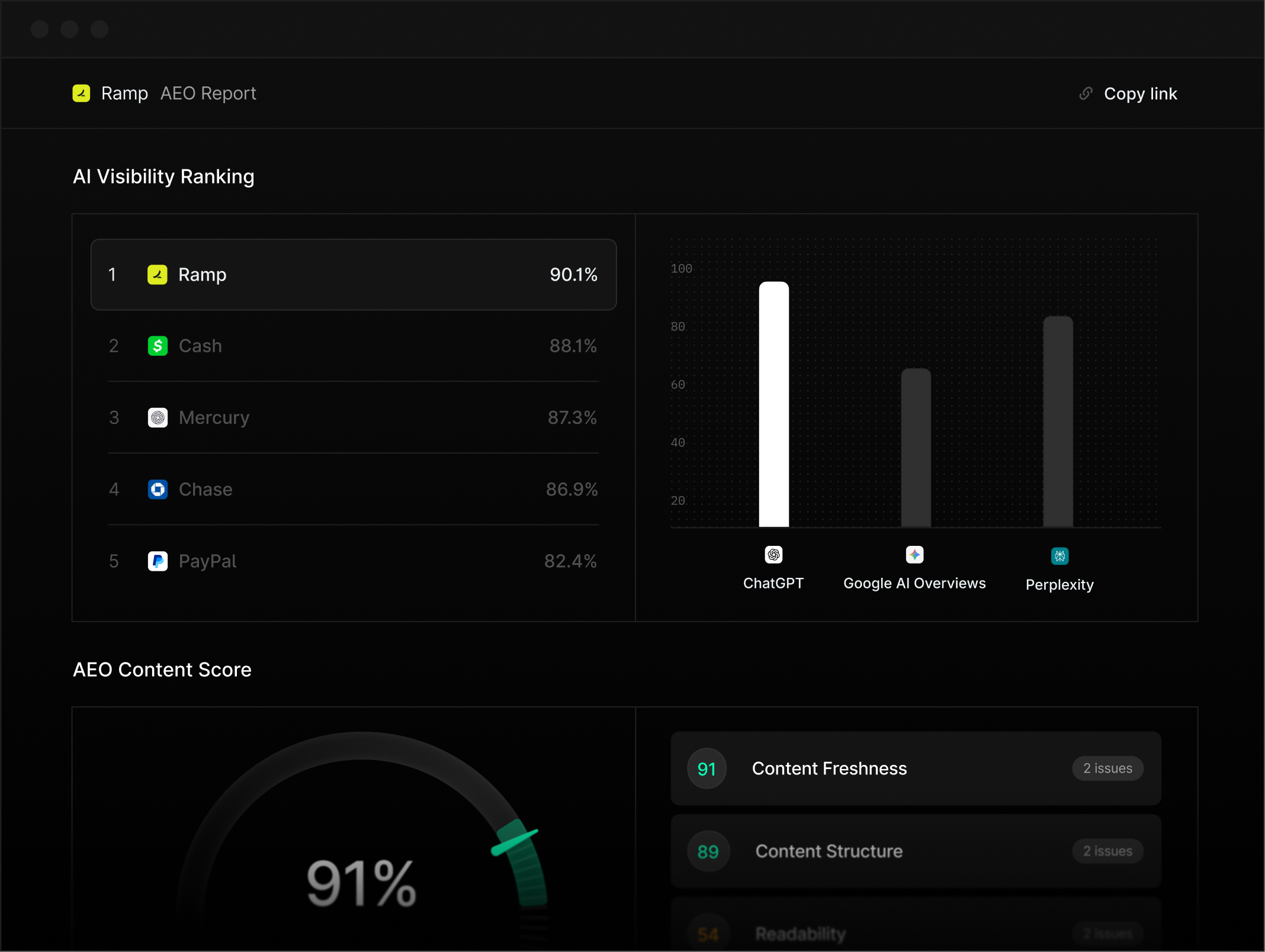
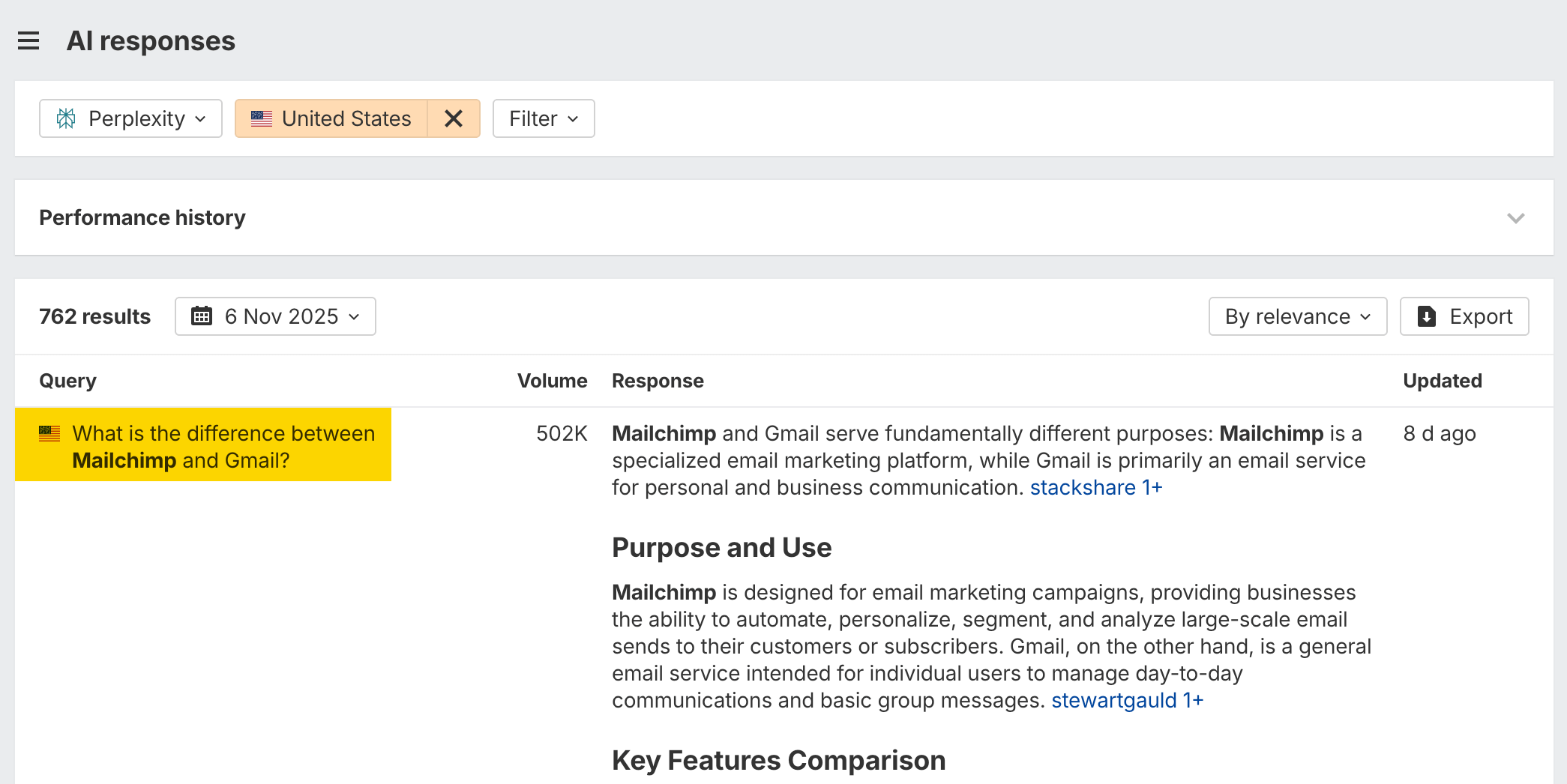
The catch for both: Profound is priced for enterprise budgets from the start, and Ahrefs' own Brand Radar platform page [OPEN IN NEW TAB] confirms Claude isn't among its tracked platforms, on any plan, while also requiring that separate Ahrefs subscription. Best for either one if your budget was already headed toward the thousands-per-month range. Not ideal if you're trying to stay under a few hundred dollars a month — the calculator above will point you toward Rankscale, Otterly.ai, or Peec AI instead.
Common Mistakes That Inflate Your GEO Tool Bill
- Comparing sticker price instead of cost per tracked prompt — a $29 plan tracking 15 prompts and a $95 plan tracking 50 cost almost the same per prompt once normalized; the headline number alone tells you nothing.
- Ignoring per-domain multipliers on multi-brand teams — a tool billed per domain can cost five times its advertised price the moment you add a second, third, or fourth brand.
- Assuming an engine is covered without checking the hard ceiling — Claude in particular is missing from several tools at any price, which a sticker-price comparison never flags.
- Buying more prompt volume than you need — a bigger tier than your actual usage pattern requires just means you're paying for headroom you'll never use.
Frequently Asked Questions
How many prompts should you track for AI visibility monitoring? Around 15-25 prompts is enough to start — covering your core branded, category, and competitor questions without generating so much data it becomes noise. Larger, more advanced programs track anywhere from 200 to 500 prompts across the full buying journey, but that level of coverage isn't necessary for most teams starting out.
Is there a free AI visibility tracking tool? Yes, in a limited but real sense. HubSpot's AEO Grader and AthenaHQ's Essential tier are both genuinely free, no credit card required. Both cap prompts and engines low enough that they work best as a "does this even matter for my brand" pilot rather than a full ongoing monitoring setup.
Why do AI visibility tools cost more than typical SEO rank trackers? The category is barely two years old and vendors are still figuring out how to price something that didn't exist before 2024. Most bill by tracked prompts and AI engines monitored, rather than the flat per-keyword pricing model traditional SEO rank trackers settled into over a decade ago.
Does every AI visibility tool track Claude? No. HubSpot AEO and Ahrefs Brand Radar can't track Claude at any price, on any plan — a hard ceiling no amount of budget fixes. If your buyers are likely to ask Claude about your category, that rules out two otherwise reasonable options before price even enters the conversation.
What's the real cost per tracked prompt for AI visibility tools? It depends far more on how well a plan's prompt allowance and engine cap match what you actually need than on the advertised monthly price. Two plans that look far apart in sticker price can land within a few cents of each other per tracked prompt once you do the real math — which is exactly what the calculator above does for your specific numbers.
Final Verdict
There's no single cheapest GEO tool — it depends entirely on how many prompts you're tracking, which AI engines actually matter to your audience, and whether you're a solo blogger or a multi-brand agency. That's exactly why a flat pricing table can't answer this the way the calculator at the top of this page can.
If you want a fast rule of thumb without running your own numbers: a solo blogger or small brand testing the waters should start with HubSpot AEO's free Grader or Rankscale's $20 entry tier, a mid-size team that needs unlimited seats and real benchmarking fits well on Otterly.ai or Peec AI, and an agency or enterprise team that needs six-plus engines and an action layer should expect to land on Profound or Scrunch AI's higher tiers. These are estimates, not quotes, and this isn't paid placement — run your own situation through the calculator above before you commit budget to a plan.
Tracking cost is only half the picture, though — if you haven't sorted out which tools actually belong in your stack yet, see the best AI SEO tools for bloggers in 2026 for the full lineup, from free options to the point where a paid upgrade earns its keep.