Best GPT for Writing in 2026: Custom GPTs Tested and Ranked

On this page5 sections
- Best GPT for Writing: Quick Comparison at a Glance
- The Best GPT for Writing — Ranked
- 1. GPT-4o Plain ChatGPT — Best Overall for Prose
- 2. Reasoning Models o-series / GPT-5-class — Best for Structure and Outlines
- 3. Custom GPTs from the GPT Store — Worth It Only If You Skip the Store
- 4. Claude — Best Alternative When Context Length Is the Real Problem
- When a Custom GPT Isn't Enough Anymore
- Frequently Asked Questions
- Final Verdict
"Best GPT for writing" is actually two questions — which model to use inside ChatGPT, and which custom GPT to pin — and the honest answer to both is simpler than any Store roundup makes it sound.
- Winner: GPT-4o inside plain ChatGPT — best all-round prose quality, no custom GPT required
- Best custom GPT worth pinning: a saved system prompt for your genre or style — same model, zero extra cost
- Best for long-form structure help: reasoning models (o-series/GPT-5-class) — stronger outlines, flatter prose
- When to stop customizing ChatGPT: Sudowrite — once you need persistent story memory, not just a better prompt
- "Best GPT for writing" hides two different questions — which model to use inside ChatGPT, and which custom GPT from the Store to pin — and most search results answer neither cleanly
- A custom GPT is a saved system prompt plus optional instructions and files running on the same base model — it adds convenience, not new capability
- GPT-4o is still the strongest all-round model for natural-sounding prose; reasoning models are better at outlines and structure but write flatter sentences
- No custom GPT in the Store has persistent story memory — that only exists in purpose-built fiction tools like Sudowrite
- Past a single article or short story, the ceiling on any ChatGPT configuration is the same fixed context window, custom GPT or not
Search "best GPT for writing" and you'll get two completely different kinds of answers mixed together: roundups of custom GPTs from the Store, and comparisons of which ChatGPT model writes better. Nobody tells you these are separate decisions.
Here's the distinction that actually matters: a custom GPT is not new software. It's a saved system prompt — plus, optionally, some custom instructions and a few uploaded reference files — running on exactly the same model as plain ChatGPT. The thing that actually changes your output quality is which model you're using, not which GPT you pinned.
That's the whole article. For where AI genuinely helps at each stage of a longer project rather than just a single piece, our full guide to novel writing software by stage covers the wider toolkit.
Best GPT for Writing: Quick Comparison at a Glance
| Option | Best For | Free Plan | Price (USD/mo) | Rating |
|---|---|---|---|---|
| GPT-4o | Natural-sounding prose and dialogue | Yes | Free–$20 | 4.6/5 |
| Reasoning models (o-series/GPT-5-class) | Outlines and long-form structure | Included in Plus/Pro | $20-$200 | 4.2/5 |
| Custom GPTs (Store) | Reusable style/voice prompts | Yes | Free with ChatGPT | 4.0/5 |
| Claude | Longer single documents | Yes | Free–$20 | 4.4/5 |
Ratings reflect writing use specifically, not each product's full feature set. The breakdowns below explain why the ranking looks like this — or browse the full AI writing tools directory if you want to compare options beyond just ChatGPT and Claude.
The Best GPT for Writing — Ranked
1. GPT-4o (Plain ChatGPT) — Best Overall for Prose
ChatGPT running on GPT-4o is still the best all-round choice for anyone who just wants good writing, with zero setup. It handles dialogue, tone, and natural phrasing better than the reasoning-focused models, and you don't need a custom GPT, a special prompt library, or any configuration to get there — you open a new chat and start typing.

Key features:
- Strong natural prose and dialogue
- 128K-token context window
- Fast responses
- Free tier available
- No setup required
Pricing: free tier; Plus $20/month; Pro $200/month Best for: anyone writing articles, scenes, or short-form fiction who wants the best output with zero setup Not ideal for: manuscript-length work needing memory that persists across sessions
2. Reasoning Models (o-series / GPT-5-class) — Best for Structure and Outlines
The reasoning-focused models available in ChatGPT trade prose quality for structural thinking. Ask one to build a chapter outline, tighten a plot's logic, or catch a contradiction across a long piece, and it does noticeably better than GPT-4o. Ask it to actually write the scene, and the sentences come out flatter — more mechanical, less voice.
OpenAI's own guidance on choosing between model families puts it plainly: reasoning models are for "agentic planning and decision-making," while GPT-series models are built for faster, more cost-efficient "task execution" — which is exactly the split between outlining and drafting.
Key features:
- Stronger logical structuring
- Better at long outlines and consistency checks within a session
- Slower response time
- Higher usage cost on metered plans
- Weaker at natural dialogue
Pricing: included in ChatGPT Plus/Pro at higher usage cost Best for: outlining a novel or structuring a long piece before switching back to GPT-4o to draft Not ideal for: writing the final prose directly — use it for structure, not sentences
3. Custom GPTs from the GPT Store — Worth It Only If You Skip the Store
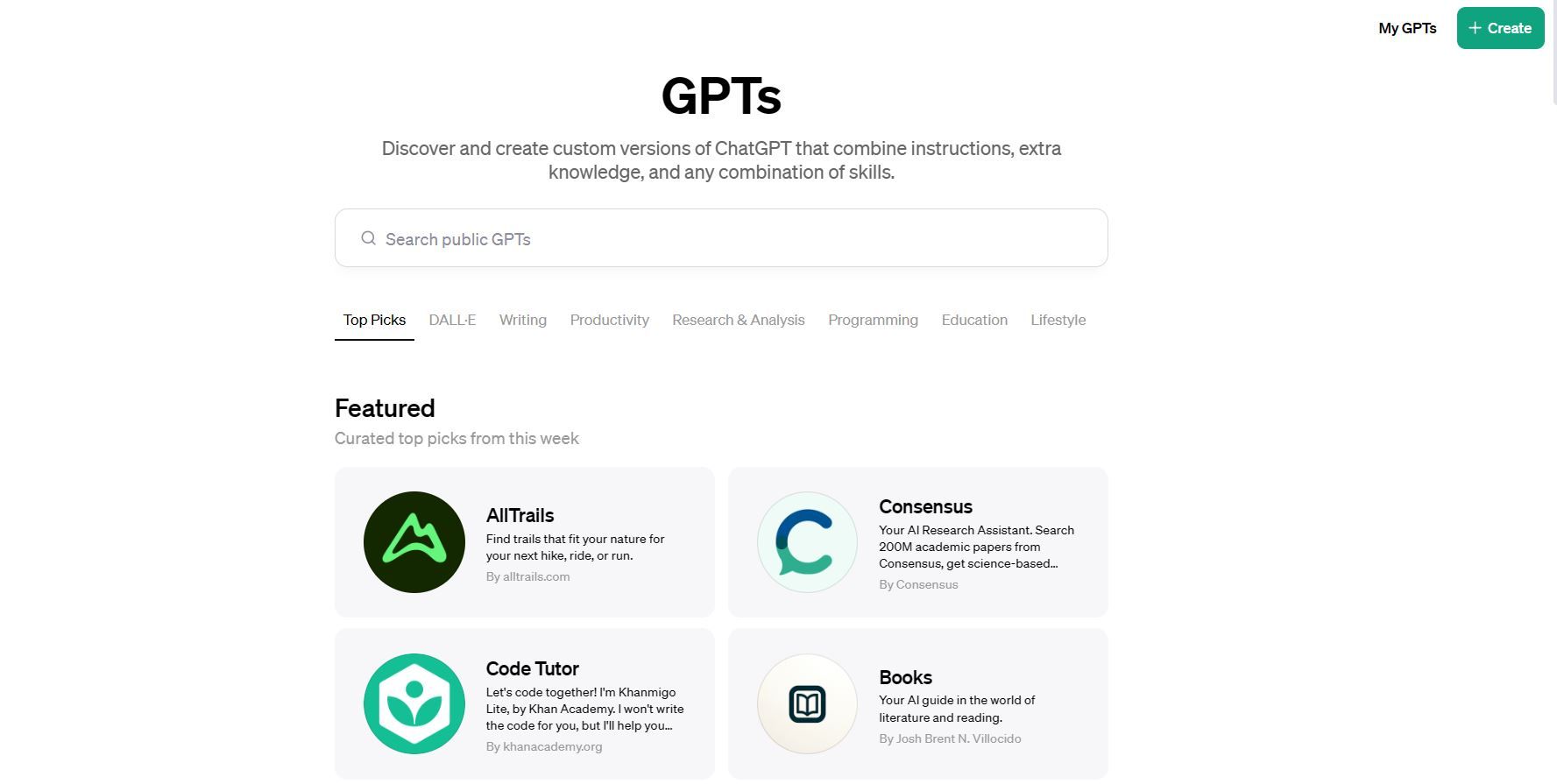
This is the one most roundups get wrong. A custom GPT in the Store is a saved system prompt, sometimes with a few uploaded files for style reference, running on the same underlying model as plain ChatGPT. Per OpenAI's own documentation on building custom GPTs, a GPT is built from instructions (an 8,000-character behavior guide) plus optional knowledge files — reference material, not a different model.
Pinning "Creative Writing Coach" or "Novel Writer" from the Store saves you a search — it doesn't give you a different, better piece of software. Writing your own saved prompt in a pinned conversation does the identical job for free, and you control exactly what it says.
Key features:
- No new model or memory
- Reusable saved instructions
- Optional file uploads for style reference
- Discoverable in GPT Store
- Zero cost beyond your ChatGPT subscription
Pricing: free with any ChatGPT plan Best for: writers who want a consistent voice or style prompt without rewriting it every session Not ideal for: anyone expecting fiction-specific features like character or plot tracking — none exist in a custom GPT
4. Claude — Best Alternative When Context Length Is the Real Problem
Claude is worth a look when the actual bottleneck is context length rather than prose style — its context window runs meaningfully longer than ChatGPT's on paid plans, which matters once a single document gets too long for GPT-4o to hold in mind at once. It's still a general-purpose chatbot, though — no custom-GPT-style ecosystem, and no memory that persists between separate chats.
For how it actually compares to GPT and Gemini on fiction prose specifically, see our best AI model for creative writing breakdown. For a fuller breakdown of where each one actually wins on writing quality, speed, and pricing, see our detailed ChatGPT vs Claude comparison for freelance writers.

Key features:
- Longer context window
- Strong at maintaining tone across a long document
- Free tier available
- No custom-GPT-equivalent ecosystem
- General-purpose only
Pricing: free tier; paid plans from roughly $20/month Best for: long single documents where context length is the specific bottleneck Not ideal for: multi-session projects needing memory that persists between chats
When a Custom GPT Isn't Enough Anymore
Ask yourself three things: how long is the actual project, do you need the AI to remember something across separate sessions rather than within one chat, and has tone or plot consistency already started slipping. If any of those show up, the fix isn't a better custom GPT — it's a tool with a real story bible. Our comparison of AI novel writer tools built for long-form fiction covers exactly where that line sits and which purpose-built options actually solve it.
Frequently Asked Questions
Is there a GPT specifically for writing a book? Not one built by OpenAI itself. Several custom GPTs in the Store are prompted for book writing, but they run on the same base model as plain ChatGPT with no persistent story memory — for a full manuscript, a dedicated tool like Sudowrite handles consistency better.
Which ChatGPT model writes the best prose? GPT-4o remains the most commonly used for natural-sounding prose. Reasoning-focused models are stronger at structuring an outline or argument but tend to write flatter, more mechanical sentences.
Are custom GPTs actually different software, or just prompts? Just prompts, plus optional instructions and uploaded files, layered on the same underlying model. A custom GPT can't do anything a well-written saved prompt in plain ChatGPT can't.
Is a custom GPT better than Sudowrite for writing a novel? No, past short-form work. Custom GPTs have no persistent story bible and hit the same context-window ceiling as plain ChatGPT once a manuscript passes roughly 20,000-30,000 words.
Final Verdict
For most writing — articles, scenes, emails, a short story — just use GPT-4o in plain ChatGPT. Don't bother hunting the Store for a custom GPT; if you want a consistent style prompt, write your own and save it, it's free and it's the same model either way.
Reach for a reasoning model only when you need help structuring something long, and switch back to GPT-4o to actually draft it. And the moment you notice yourself re-explaining your own plot or characters to the AI every session, that's not a prompting problem — that's the signal to move to a tool built for it, like Sudowrite.