Conversational AI for Customer Service: 2026 Guide

On this page9 sections
- Quick Comparison at a Glance
- The Platforms, One at a Time
- Intercom Fin — Best for Highest Resolution Rate
- Zendesk AI — Best for Existing Zendesk Customers
- Tidio — Best Free Option
- Freshdesk Freddy — Best for Session-Based Billing
- Ada — Best for Enterprise and Compliance Needs
- What Conversational AI for Customer Service Can and Can't Handle
- What Changed: Salesforce Now Owns Fin Formerly Intercom
- Conversational AI for Customer Service Pricing Models Compared
- Which Platform Fits Your Business Size
- Solo Founders and Small Teams Under 10 People
- Growing Support Teams 10-50 Agents
- Ecommerce Support Specifically
- Enterprise and Compliance-Heavy Orgs
- How to Choose
- Frequently Asked Questions
- Final Verdict
There's no single winner in conversational AI for customer service — it depends on your business size and how you're billed. Intercom's Fin has the highest reported resolution rate and is now backed by Salesforce. Tidio is the best free option to actually test AI support before you commit budget. Ada is built for enterprise contracts, not self-serve signup.
- Resolution rates across the major platforms sit around 60-76%, not 100% — budget for human handoff on the rest
- Pricing models are fundamentally different (per resolution, per session, per seat plus add-on, or enterprise contract), so sticker prices aren't comparable until you run your own volume through them
- Salesforce completed its acquisition of Fin (formerly Intercom's AI agent) on September 10, 2026 — buying Intercom today means buying into Salesforce's ecosystem
- The right platform depends on business size more than raw AI quality
- No platform eliminates human agents; the best ones just make the handoff to a human less painful
Every vendor selling conversational AI for customer service says it "resolves" tickets. What none of them tell you upfront is what that actually costs once you plug in your own conversation volume, or which of your support queries the AI genuinely handles versus which ones it quietly punts to a human anyway.
There isn't one correct answer here. The right platform depends on your team size, what you're already paying for, and which pricing model you can actually forecast against. And the timing matters more than usual right now: Salesforce closed its acquisition of Fin, the AI agent formerly branded under Intercom, on September 10, 2026 — which changes what "just go with Intercom" actually means for anyone buying today.
This guide walks through what these tools can and can't do without a human, breaks down how Fin, Zendesk AI, Tidio, Freshdesk's Freddy, and Ada actually charge you, and points you to the right pick based on your business size.
Quick Comparison at a Glance
| Platform | Best For | Free Plan | Pricing Model | Starting Price |
|---|---|---|---|---|
| Intercom (Fin) | Mid-market teams wanting the highest resolution rate | No | Per resolution | $0.99/resolution, 50/month minimum, plus seat plan |
| Zendesk AI | Existing Zendesk Suite customers | No | Per verified resolution | $1.50-2.00/resolution above your allowance |
| Tidio | Small teams testing AI support for the first time | Yes (50 conversations/month) | Per seat plus AI add-on | Free plan available; Lyro AI add-on from $32.50/month |
| Freshdesk (Freddy) | Freshworks customers who want session-based billing | Yes (limited) | Per session | Roughly $0.10-0.49/session, plus Copilot at $29/agent/month |
| Ada | Enterprise and compliance-heavy support orgs | No | Annual contract, billed per conversation | Roughly $30,000-$300,000+/year |
The Platforms, One at a Time
Intercom (Fin) — Best for Highest Resolution Rate
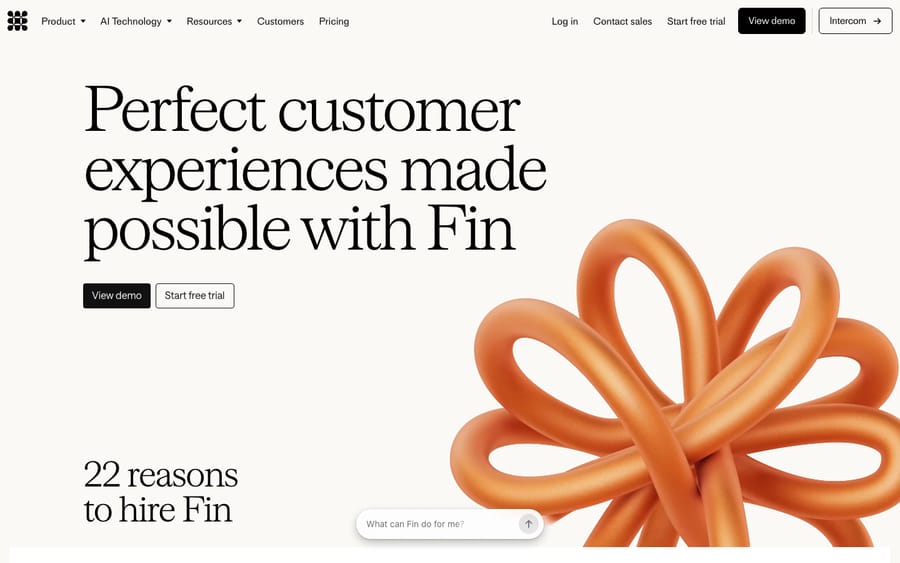
Intercom's Fin is the AI agent most other vendors get compared against, and for good reason — it's reported resolving up to 76% of queries end-to-end across email, chat, SMS, and social channels, which is the highest figure of any platform in this guide. It bills per resolution at $0.99 each, with a 50-resolution monthly minimum, on top of whatever seat plan you're already paying for. As of September 2026, it's also owned by Salesforce, which is the biggest thing to factor into a buying decision right now.
Not ideal for: teams that want a predictable flat monthly bill rather than a usage-based one.
Zendesk AI — Best for Existing Zendesk Customers
Zendesk's AI agents sit on top of its existing Suite product, and the value case is strongest if you're already running your help desk through Zendesk. It charges $1.50 per resolution on a committed pack, or $2.00 pay-as-you-go, above an included monthly allowance — and since May 2026, only "verified" resolutions (confirmed by an LLM check) count toward that bill, with assisted escalations billed at zero. Not ideal for: teams not already on Zendesk, since the AI layer isn't sold as a standalone product.

Tidio — Best Free Option
Tidio is the only platform here with a genuinely usable free tier — 50 billable conversations and 50 one-time Lyro AI conversations before you pay anything. Paid plans start at $29/month (Starter) and its Lyro AI add-on starts at $32.50/month for 50 AI conversations, scaling up from there. It's the lowest-risk way to find out whether AI support actually helps your specific ticket mix before spending real budget.
Not ideal for: teams that outgrow it fast — Tidio's plan stack jumps from $59/month straight to $749/month, with no tier in between.

Freshdesk (Freddy) — Best for Session-Based Billing
Freshdesk's Freddy AI agent charges per session rather than per resolution — you pay for every AI interaction whether or not it actually solved the customer's problem, at roughly $0.49/session for email and $0.10/session for web chat via Freshbot. The separate Copilot add-on for human agents runs about $29/agent/month. Not ideal for: high-volume teams with a lot of failed or abandoned AI sessions, since you're billed regardless of outcome.

Ada — Best for Enterprise and Compliance Needs
Ada has moved away from per-resolution pricing entirely and now sells conversation-based annual contracts, typically in the $30,000-$300,000+/year range depending on volume, with a median contract around $70,000/year. There's no public pricing page and no self-serve trial — implementation runs 8-16 weeks with dedicated onboarding. Not ideal for: any team that wants to try before committing budget, since that option doesn't exist here.
What Conversational AI for Customer Service Can (and Can't) Handle
Vendors love quoting resolution rates. Fin itself claims an average resolution rate of 76% across its 12,000+ customers, with some seeing over 85%; Zendesk's AI agents land in a comparable range once you tighten the definition to "verified" resolutions. Those numbers sound close to full automation, but the gap matters more than it looks — and they're vendor-reported averages, not a guarantee for your specific ticket mix.
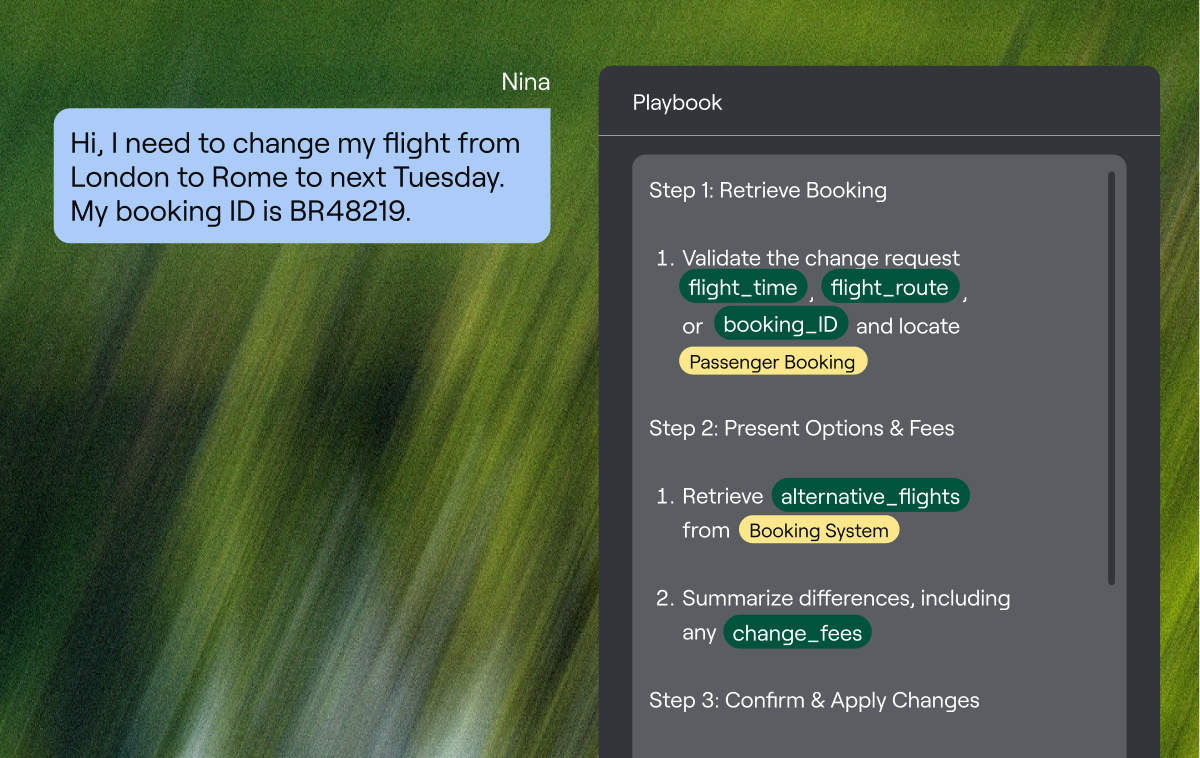
A "resolution" in most of these platforms counts one of two ways: a confirmed resolution, where the customer explicitly says the answer helped, or an assumed resolution, where the customer just leaves without asking anything else. That second category inflates the headline number without proving the customer was actually satisfied.
Here's what conversational AI genuinely handles well right now, without much fuss:
- Order status and shipping updates
- Password resets and account changes
- FAQ-style lookups (return policy, hours, plan details)
- Simple troubleshooting with a known fix
And here's what still gets escalated, no matter which platform you pick:
- Emotionally charged complaints or anything involving a refund dispute
- Policy exceptions that require judgment
- Multi-system issues that span billing, shipping, and account status at once
- Anything the customer explicitly asks to discuss with a person
The bigger operational problem isn't the AI's language skills — it's the handoff itself. Roughly 90% of support leaders say they struggle to make the transition from bot to human feel smooth, even though nearly all of them agree a clean handoff is essential.
If you're evaluating an ai customer service chatbot, ask every vendor to show you their handoff flow before you ask about resolution rate. That's where deployments actually fail.
What Changed: Salesforce Now Owns Fin (Formerly Intercom)
Fin split off from the Intercom brand as its own product name in August 2026, after years of being sold as "Intercom's Fin AI agent." Salesforce signed a definitive agreement to acquire it in June 2026, and the deal closed on September 10, 2026, at a price of roughly $3.6 billion — the fifth AI-related acquisition Salesforce announced that year.
For anyone evaluating this platform right now, the practical takeaway is simple: nothing changes in your pricing or plan structure immediately, but you're no longer buying from an independent company. You're buying into Salesforce's broader customer service stack, which brings Fin's 30,000-plus existing customers and its resolution-rate track record under the Agentforce umbrella.
None of the top-ranking pages on this exact topic mention the acquisition at all, including Salesforce's own newsroom announcement of the completed deal, which frames it purely as a corporate development story rather than something a buyer evaluating the product should factor in.
Conversational AI for Customer Service Pricing Models Compared
The five platforms in this guide charge in four genuinely different ways, and comparing sticker prices across them is close to meaningless until you translate each one into your own conversation volume.
Per resolution (Fin, Zendesk AI): you pay only when the AI resolves a conversation, confirmed or assumed. This scales with success, but a spike in ticket volume during a launch or outage means a spike in your bill too.
Per session (Freshdesk's Freddy): you pay for every AI interaction regardless of whether it actually solved anything. Cheaper per unit, but you're paying for failed attempts as well as successful ones.
Per seat plus AI add-on (Tidio): your base cost is predictable (a flat monthly seat fee), and the AI layer is a separate line item priced by conversation volume, which makes it easier to budget in advance.
Annual enterprise contract (Ada): billed per conversation but negotiated as a yearly commitment rather than a metered monthly bill, with no self-serve signup or low-cost way to test the platform first.
| Platform | Billing Unit | Rate | What Counts as Billable | Minimum Commitment |
|---|---|---|---|---|
| Intercom (Fin) | Per resolution | $0.99 | Confirmed or assumed resolution | 50 resolutions/month |
| Zendesk AI | Per verified resolution | $1.50 (committed) / $2.00 (pay-as-you-go) | Only LLM-verified resolutions | Included allowance, then billed above it |
| Tidio (Lyro AI) | Per conversation, add-on | From $32.50/month for 50 conversations | Every AI conversation | None — scales with plan tier |
| Freshdesk (Freddy) | Per session | ~$0.49/session (email), ~$0.10/session (web chat) | Every AI session, resolved or not | 500 included sessions on Pro/Enterprise |
| Ada | Per conversation, annual contract | Custom, typically $30k-$300k+/year | Negotiated per contract | Annual commitment, no self-serve tier |
To make this concrete: a team handling roughly 500 support conversations a month, at a typical 65% resolution rate, would see around 325 AI-resolved conversations on Fin's model — call it $320-350/month just in resolution fees, on top of seat costs. On Freshdesk's per-session model, that same 500 conversations cost roughly $50-250/month regardless of how many actually got resolved, since you're paying per attempt rather than per success. Run your own numbers before assuming either one is "cheaper" — the answer flips depending on your actual resolution rate.
Scale that same math up to 5,000 conversations a month and the gap widens fast. Fin's per-resolution model at a 65% resolution rate would run somewhere around $3,200-3,500/month before seats. Zendesk's committed-pack rate of $1.50/resolution lands a little lower at similar volume, but only if you're disciplined about staying within your committed pack — Zendesk auto-bills every verified resolution above commit with no cap and no grace period, so an unexpected ticket spike from a product outage or a bad release can blow past your forecast fast.
Tidio and Freshdesk both stay cheaper at this volume precisely because they weren't built for it — you'll likely have outgrown their plan tiers before you get anywhere near 5,000 monthly conversations.
Which Platform Fits Your Business Size
Solo Founders and Small Teams (Under 10 People)
Tidio's free plan covers 50 conversations a month with basic automation before you pay anything, which makes it the realistic starting point if you've never run an AI chatbot before. The Lyro AI add-on scales from there once you outgrow the free tier. Freshdesk's per-session pricing is the other reasonable option at this size, since you're not locked into a seat count you don't need yet.
If Tidio or Freshdesk's free tier isn't quite enough but you're not ready for an enterprise contract, we've got a dedicated post coming on what a small business can realistically deploy without a developer.
Growing Support Teams (10-50 Agents)
If you're already paying for Zendesk Suite, adding its AI agents is the lower-friction move rather than switching platforms just for the AI layer. Teams already on HubSpot for their CRM have a similar case for Service Hub's built-in chat and bot tooling instead of bolting on a separate vendor. This is roughly the size where per-resolution AI pricing starts beating the cost of hiring another support agent outright, and it's also the size where the decision between a full AI agent and a hybrid AI-plus-live-chat setup gets genuinely close — we cover that trade-off in more depth in a dedicated post.
Ecommerce Support Specifically
Ecommerce support has its own shape: order tracking, returns, abandoned-cart recovery, and native integration with Shopify or WooCommerce matter more than general-purpose resolution rate. Gorgias is built specifically around that workflow rather than treating ecommerce as one use case among many. We're covering this in more depth in a dedicated post on the best chatbot options for ecommerce stores.
Enterprise and Compliance-Heavy Orgs
Ada is built for this tier and largely only this tier — there's no self-serve signup, implementation typically runs 8-16 weeks, and pricing starts around $30,000 a year. If your support org needs SSO, data residency guarantees, or formal compliance certifications, that enterprise sales process is the trade-off for getting them, and none of the self-serve platforms in this guide are built to offer the same guarantees.
We're covering the enterprise buying process in more depth in a dedicated post. Browse the wider AI customer support category if your requirements go beyond chat-first tools into voice or full helpdesk replacement.
How to Choose
Before you demo anything, answer three questions: What's your actual monthly conversation volume — not a guess, a number from your existing help desk? What platform are you already paying for, since Zendesk, Freshdesk, and HubSpot customers all have a lower-friction upgrade path than switching vendors entirely? And can your team absorb a 25-40% escalation rate without hiring, since no platform here gets anywhere close to fully automated support?
Frequently Asked Questions
What is conversational AI in customer service? It's AI that uses natural language processing and machine learning to understand and respond to customer messages the way a person would, as opposed to older rule-based chatbots that only match fixed keywords or decision-tree menus.
Can AI chatbots fully replace human customer service agents? No. Even the best-performing platforms report resolution rates in the 60-76% range, and the remaining share — emotionally sensitive complaints, policy exceptions, multi-system issues — still routes to a human by design in every major platform's own documentation.
How much does an AI customer service chatbot cost? It depends entirely on the billing model. Fin charges $0.99 per resolution with a 50-resolution monthly minimum, Zendesk AI charges $1.50-2.00 per verified resolution, Freshdesk charges per session (roughly $0.10-0.49), Tidio's Lyro AI add-on starts at $32.50/month for 50 conversations, and Ada is enterprise-only starting around $30,000/year.
What happened to Intercom Fin? Fin was rebranded as its own product name, separate from the wider Intercom brand, in August 2026. Salesforce completed its acquisition of Fin on September 10, 2026, for approximately $3.6 billion, folding it into Salesforce's Agentforce customer service lineup.
Is conversational AI the same as a chatbot? Not exactly. Every conversational AI system can power a chatbot, but "chatbot" also covers older rule-based bots with no real language understanding. Conversational AI specifically refers to the NLP and machine-learning layer that lets a bot handle open-ended, naturally phrased questions instead of only matching fixed keywords.
Final Verdict
If you can stomach per-resolution pricing and don't mind buying into Salesforce's ecosystem, Fin is still the strongest all-around pick for a mid-market team — it has the track record and the resolution rate to back it up. If you want to test whether AI support is worth it at all before committing budget, start with Tidio's free tier; there's no reason to sign an annual contract with Ada or commit to Zendesk's AI pricing before you've proven the concept on something free. Either way, budget for the human handoff — nothing in this guide gets you out of needing one.