Best Image Generation Models in 2026: 5 Picks Compared

GPT Image 2.5 (the model behind ChatGPT) is the best all-round pick for prompt accuracy and text-in-image. Flux 2 wins on photorealism and speed. Stable Diffusion is the free, open-source route. And Midjourney's own model still wins if you want a deliberate, cinematic look over literal accuracy.
- The tool you use and the model behind it are two different things — the same prompt looks different in ChatGPT, Freepik, and Midjourney because each one runs a different model, not because of some interface quirk
- Commercial-use rights depend on the specific model and license tier, not the brand name on the tool — some open-weight models are free to use commercially, others require a paid license even though the weights are public
- Google's naming is genuinely confusing right now — Imagen 4, Nano Banana, and Nano Banana Pro all exist at once, and this article untangles which one you're actually getting and where
- Stable Diffusion hasn't had a major model update since October 2024 — worth knowing before you assume it's still the sharpest open-source option available
Type the same prompt into two different AI image tools and you'll sometimes get two completely different results. Same wording, same intent, wildly different output. That's not a prompting problem — it's because the two tools aren't running the same model, and knowing the best image generation models behind each one tells you what to expect before you type a single prompt.
Here's the short version: ChatGPT's GPT Image 2.5 gives you the most reliable all-round result, and Flux 2 — accessible through Freepik AI Suite — is faster and leans more photorealistic. Stable Diffusion is the pick if you want free and self-hostable, and Midjourney's own model is still the choice for a deliberately art-directed, cinematic look.
Below is what each model actually does well, where it falls short, and — because this matters more than most roundups admit — whether you're even allowed to use the output commercially.
Best Image Generation Models: Quick Comparison
| Model | Made By | Best For | Access Tool | Commercial Use |
|---|---|---|---|---|
| GPT Image 2.5 | OpenAI | Prompt adherence, text-in-image, complex scenes | ChatGPT | Yes, per ChatGPT plan tier |
| Flux 2 | Black Forest Labs | Photorealism, speed | Freepik AI Suite | Yes (varies by weight and tier — see below) |
| Stable Diffusion (SDXL) | Stability AI | Free, open-source, self-hostable | Stable Diffusion Web | Yes, permissively licensed |
| Nano Banana Pro / Imagen | Google DeepMind | Realism, editing, brand consistency | Nano Banana | Yes, per Google plan tier |
| Midjourney v7 | Midjourney Inc. | Cinematic, art-directed style | Midjourney | Yes, per subscription tier |
If you're planning to sell anything made with these, jump to the commercial-use section below before you pick one — it matters more than which model looks nicest in a demo.
The Best AI Image Generation Models — Our Picks
1. GPT Image 2.5 — Best Overall
GPT Image 2.5 is OpenAI's current image model, built natively into GPT-4o-class models rather than bolted on as a separate tool.

It shipped September 8, 2026 as the successor to GPT Image 2, which itself replaced DALL-E 3 inside ChatGPT back in April 2026. It currently leads independent arena leaderboards on complex scene composition, iterative editing, and — its biggest edge over almost everything else on this list — actually rendering readable text inside an image instead of garbled shapes. If you're still relying on the 4o-era generator, our breakdown of what ChatGPT's 4o image generator can't do in 2026 covers exactly where it falls short of this newer model.
- Native multimodal generation inside ChatGPT
- Strong text-in-image rendering
- Iterative in-conversation editing
- Reliable complex scene composition
- Diagram and comic-panel generation
Pricing: free tier with limited generations, then Plus and Pro plans for higher limits and priority generation.
Best for: readers who want the most reliable single result without learning prompt tricks specific to one model.
Not ideal for: high-volume, fast-turnaround work — it's noticeably slower per image than Flux 2 or Nano Banana.
2. Flux 2 — Best for Photorealism and Speed
Flux 2 is Black Forest Labs' current flagship model, built by former Stability AI researchers who left to build a faster, more open successor to Stable Diffusion.
Its open-weight "Klein" variants generate in under a second and deliver strong photorealism straight out of the box. The Kontext editing mode is the more interesting feature for practical work — it accepts up to 10 reference images and edits natively instead of regenerating the whole scene from scratch, which means far less "why did my background change too" frustration.
One licensing detail worth knowing before you build anything on Flux: only the 4B Klein model is released under the permissive Apache 2.0 license. The larger 9B Klein and Dev models are free to download and experiment with, but require a separate paid agreement before you can use their output commercially.

- Sub-second generation on Klein variants
- Strong photorealism
- Native multi-image editing (Kontext)
- 4MP output
- Available as both open weights and a hosted API
Pricing: free to self-host (Klein 4B, Apache 2.0 licensed), or hosted access through Freepik AI Suite's free and paid tiers.
Best for: readers who want fast, realistic output and either self-host or don't mind a tool running Flux on their behalf.
Not ideal for: readers chasing the single highest score on complex prompt adherence — that currently favors GPT Image 2.5.
3. Stable Diffusion (SDXL) — Best Free and Open-Source
Stable Diffusion is Stability AI's open-weight model family, and it's still the most widely self-hosted image generation model that exists.

Full open weights mean anyone can run it locally or fine-tune it on their own data, and the SDXL license carries no revenue cap. But here's the honest catch nobody else seems to be saying out loud: SD 3.5 shipped in October 2024, and as of this writing, no successor has followed.
That gap means Stable Diffusion is increasingly behind Flux and Nano Banana Pro on out-of-the-box quality, even though it's still the best zero-cost option available. If you're deciding between it and another free-tier favorite, our full Stable Diffusion vs Leonardo AI comparison breaks down the GPU requirement and daily token limits in more depth than fits here. For every other free and paid option in this space, the AI Image Generation category has the full list.
- Fully open weights
- Massive fine-tuning and LoRA ecosystem
- Self-hostable at zero ongoing cost
- Permissive commercial licensing (SDXL)
- Browser access with no installation via Stable Diffusion Web
Pricing: free, either self-hosted or through Stable Diffusion Web's browser access.
Best for: readers who want zero ongoing cost and don't mind that output quality now trails the newest closed models.
Not ideal for: readers chasing the sharpest possible photorealism or text rendering — that leadership has moved elsewhere.
4. Nano Banana Pro / Imagen — Best from Google
Google's image models are split across a genuinely confusing set of names. Imagen 4 is the standalone API model; Nano Banana and Nano Banana Pro are the versions powering the Gemini app, Google AI Studio, and ImageFX.
Nano Banana Pro, which launched in November 2025, is built around precise editing, brand consistency, and real-world knowledge baked into the generation itself — useful if you need an image that gets specific facts right, not just a plausible-looking scene. Separately, Imagen 4 Ultra is cited as one of the most photorealistic models available today for skin, fabric, and lighting fidelity.
- Strong photorealism (Imagen 4 Ultra)
- Precise editing and brand consistency (Nano Banana Pro)
- Real-world knowledge baked into generation
- Low-cost fast tier (Imagen 4 Fast)
- Integrated across the Gemini app and Google AI Studio
Pricing: free through the Gemini app (rate-limited), or from $0.02 per image via the Imagen 4 Fast API.
Best for: readers who already use Gemini and want image generation without adding another subscription.
Not ideal for: readers who get tripped up by the naming — try the free Gemini app version first before evaluating the paid Imagen API tiers.
5. Midjourney v7 — Best for Art-Directed, Cinematic Style
Midjourney's model is proprietary and only available through Midjourney itself — there's no separate tool running someone else's version of it.
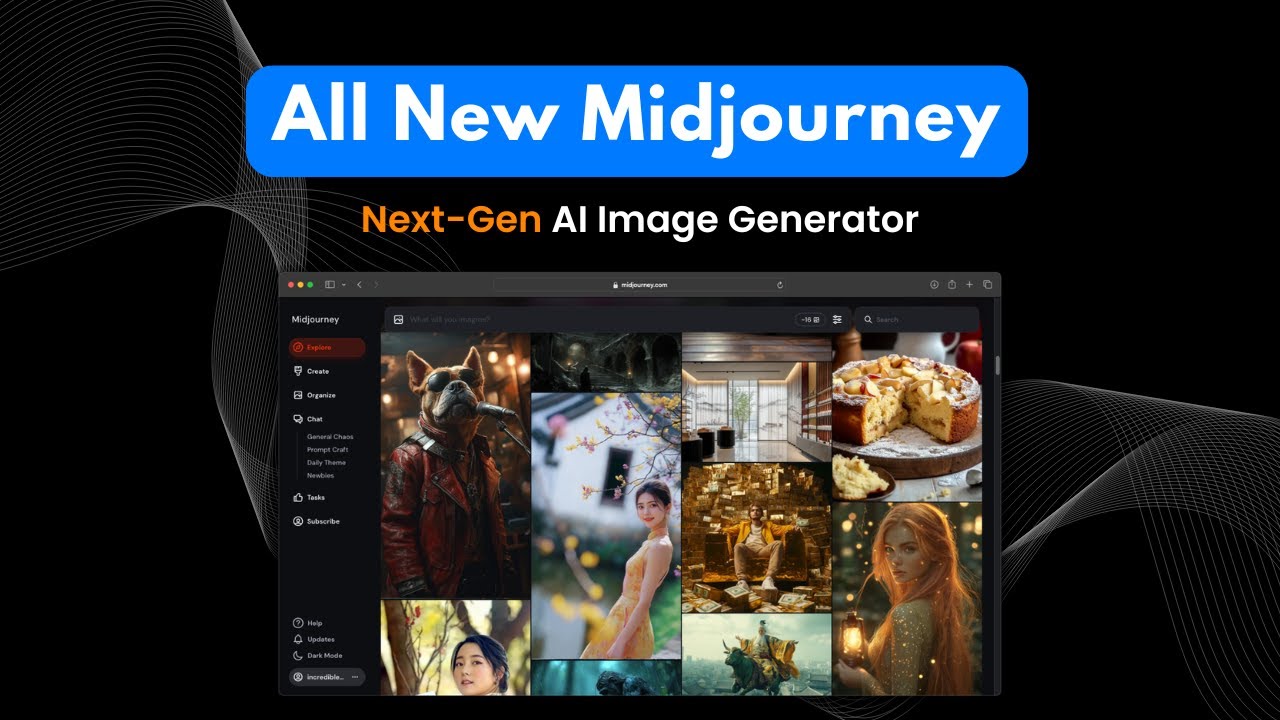
What keeps it relevant against faster, more literal competitors is its default aesthetic: output consistently looks intentionally composed and lit, closer to concept art or editorial photography than a direct rendering of the prompt. That's exactly why artists and mood-driven projects still reach for it over more accurate models.
- Distinctive cinematic default aesthetic
- Strong style consistency across a project
- Upscaling and variation tools
- Community prompt library
- Discord and web app access
Pricing: no free tier; plans start at roughly $10/mo.
Best for: readers prioritizing a specific artistic look over literal accuracy to the prompt.
Not ideal for: any image that needs readable text — Midjourney's text rendering is the weakest of the five models here, often collapsing into unintelligible shapes.
Already Using Leonardo AI or Craiyon?
Coming from our Midjourney alternatives guide? Leonardo AI doesn't run just one model — it blends its own tuned in-house model with direct Flux access, so which of the five models above you're actually getting depends on the mode you pick inside the app.
Craiyon sits at the opposite end: a lightweight, fully independent open model. It's a useful baseline for deciding whether the flagship models above are actually worth the extra cost or setup, or whether a free, simpler model already does what you need.
What About Commercial Use?
Commercial rights come down to the specific model and tier you're on, not the brand name. Flux Klein 4B (Apache 2.0) and Stable Diffusion's SDXL license are both commercially clear at no cost. Flux's larger Dev and 9B open weights, on the other hand, are non-commercial unless you self-host under Black Forest Labs' paid commercial license.
GPT Image, Nano Banana/Imagen, and Midjourney are all closed models — commercial rights are tied to whichever paid plan or subscription tier you're already on, not something you check separately.
One honest caveat: license terms shift as models update, so confirm current commercial terms on the model owner's page before selling anything built with them. If you're a freelancer planning to sell work made with any of these, our full guide to selling AI images legally covers the platform-by-platform breakdown in more depth than fits here.
Frequently Asked Questions
What model does ChatGPT use to generate images? GPT Image 2.5, released September 8, 2026. It replaced GPT Image 2, which itself took over from DALL-E 3 inside ChatGPT in April 2026 — DALL-E 3's standalone API is being phased out separately.
Is Flux better than Midjourney? Depends what you're optimizing for: Flux 2 tends to win on photorealism and speed, especially with its open-weight Klein variants, while Midjourney still wins on deliberate, art-directed composition. They're built for different outcomes, not a strict better-or-worse.
What is the best free image generation model? Flux Klein 4B is Apache 2.0 licensed and free for commercial use if you self-host it. Among hosted tools you don't have to set up yourself, Stable Diffusion Web's free SDXL access and the Gemini app's free Nano Banana access are the most usable free entry points.
Can I use AI-generated images commercially? It depends entirely on the model and plan, not the tool's brand name. Flux Dev and 9B outputs are non-commercial without a paid license, SDXL and Flux Klein 4B are commercially clear, and closed models like GPT Image, Imagen, and Midjourney tie commercial rights to your subscription tier.
Final Verdict
If you just want the best single result without thinking about which model you're using, GPT Image 2.5 through ChatGPT is the safest pick. If speed and photorealism matter more than perfect prompt adherence, go with Flux 2 through Freepik AI Suite. And if your budget is zero and self-hosting is on the table, Stable Diffusion is still the only model here that costs nothing at every step.
Pick the model for the specific thing it's actually best at — not the tool with the most familiar name. Still not sure which one fits your workflow? our interactive guide to picking the right AI image generator narrows it down to one pick based on your actual use case.